Barcelona for Cruise Passengers
Barcelona Cruise Port Guide
Which terminal, how to reach the city, the port shuttle, facilities and return-to-ship timing — everything for arrival day.
Cruise terminal
Terminals A, B, C, D, E
- Quay
- Adossat / Moll Adossat (breakwater)
- Used by
- Most large ships (MSC, Costa, Royal Caribbean, NCL, Celebrity, Princess, Virgin and more)
- Access into the city
- Port Cruise Bus to the Columbus Monument, or taxi directly to the terminal
World Trade Center — North & South (Terminals WTC)
- Quay
- Moll de Barcelona (city side)
- Used by
- Some lines and smaller ships
- Access into the city
- Walkable into the Old Town, or a short taxi
Porta de la Pau / Old Port berths
- Quay
- Near the Columbus Monument
- Used by
- Occasional small and luxury ships
- Access into the city
- Steps from Las Ramblas on foot
Where cruise ships dock in Barcelona
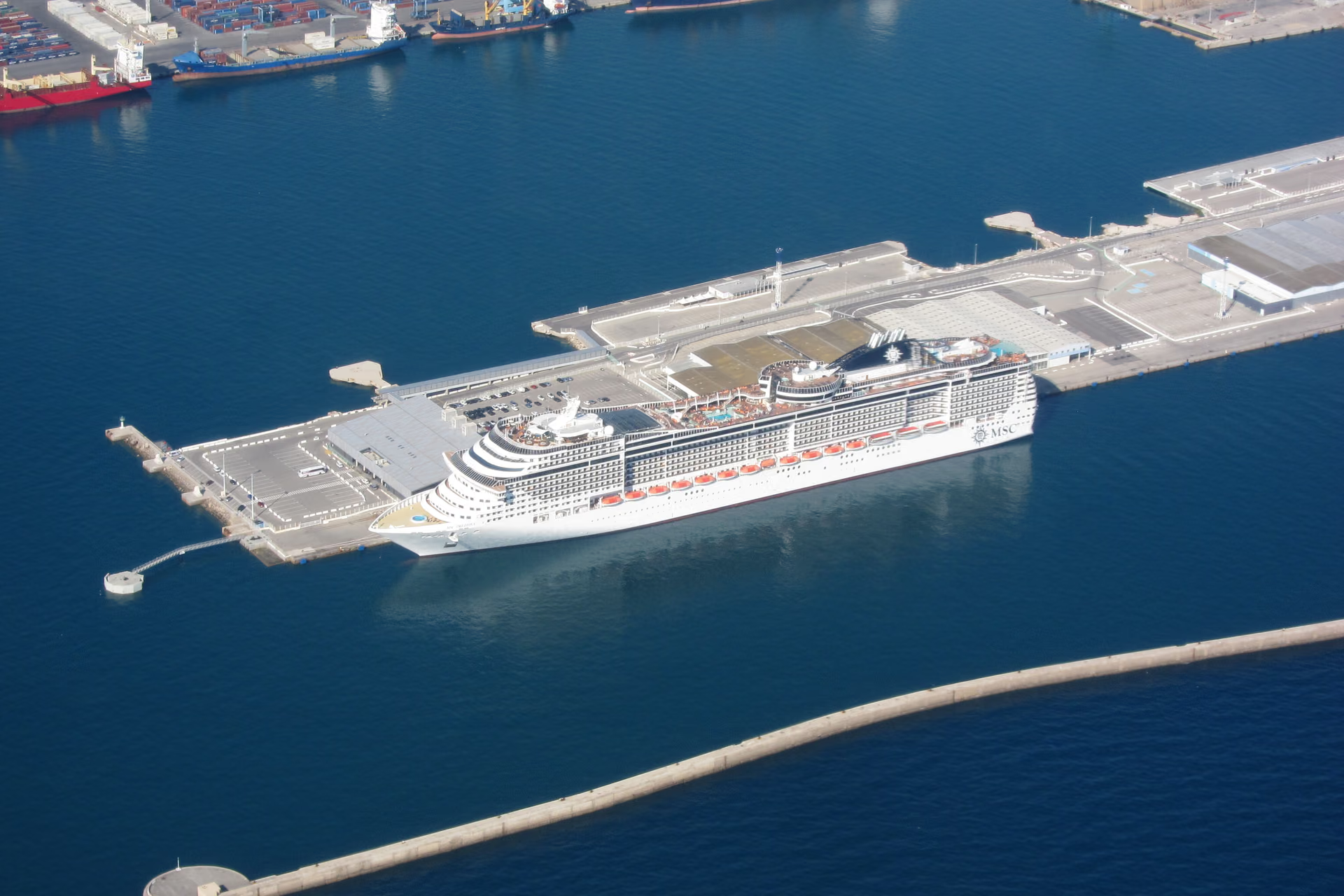
The Port of Barcelona is one of the largest cruise ports in Europe and the busiest in the Mediterranean. Ships dock at two main areas: the Adossat (Moll) quay on the breakwater, where the modern Terminals A–E handle most large ships, and the World Trade Center terminals closer to the city.
Which terminal you use depends on your cruise line and ship size, and it matters for how you reach the city — the WTC terminals are walkable into the Old Town, while the Adossat terminals sit on a breakwater and need the port shuttle or a taxi.
Check your cruise documents for your exact terminal — it determines how you reach the city.
Getting from the port to the city
From the Adossat terminals, the Port Cruise Bus (a paid shuttle) runs to the Columbus Monument at the foot of Las Ramblas in about 10 minutes. From there, the Old Town, Las Ramblas and La Boqueria market are all on foot, and metro and taxis are close by.
Taxis can drive right up to all terminals, dropping you at your ship — the most convenient option with luggage. From the WTC terminals you can walk into the city along the waterfront.
For inland sights like the Sagrada Família and Park Güell, take a taxi, a pre-booked transfer or an organised excursion rather than relying on public transport, which is slower on a limited port day.
Facilities and practicalities
The modern terminals have the usual facilities — toilets, seating, some shops and cafés, and taxi ranks. Free port Wi-Fi is limited, so download maps and tickets before you leave the ship.
The local currency is the euro, and Spanish and Catalan are the main languages, though English is widely spoken in tourist areas. Keep an eye on belongings in crowded spots like Las Ramblas.
Return-to-ship timing
Always confirm your ship's all-aboard time (usually 30–60 minutes before departure) and build in a buffer for traffic, especially in the late afternoon. Inland sights like the Sagrada Família are 25–40 minutes away, so plan them earlier in the day.
If you booked a ship's excursion, the vessel will wait for you if it's delayed. On independent tours, keep a comfortable margin and use a reputable operator that tracks ship departures.
Prefer the full excursion catalogue?
See the Barcelona cruise port guide in the context of a specific destination, or browse carefully selected shore excursions built around this same terminal.
Barcelona Port Guide — FAQs
Which terminal will my ship use in Barcelona?▼
Most large ships use the Adossat (Moll) terminals A–E; some lines and smaller ships use the World Trade Center terminals near the city. Check your cruise documents for the exact terminal.
How do I get from the Barcelona cruise terminal to the city?▼
Taxis reach all terminals directly. From the Adossat terminals, the Port Cruise Bus runs to the Columbus Monument; from the WTC terminals you can walk into the Old Town.
Is there a shuttle from the Barcelona cruise port?▼
Yes — the Port Cruise Bus connects the Adossat terminals to the Columbus Monument at the foot of Las Ramblas for a few euros each way.
How much time do I need to get back to my ship?▼
Allow a buffer before your all-aboard time. Inland sights are 25–40 minutes away, so plan them earlier and keep margin for late-afternoon traffic.
Can I walk from the cruise terminal into Barcelona?▼
From the World Trade Center terminals you can walk into the Old Town. The Adossat terminals are on a breakwater, so use the Port Cruise Bus to the Columbus Monument or a taxi.